In this project, my team and I evaluated the usability of two types of child-resistant medicine caps for adult users. Usability evaluation results were used to develop prototypes for a modified medicine cap. This project was completed with fellow graduate students Neha Kannan and Alex Fulghum. Below is an outline of our full process, including expert-based usability evaluations, user testing, data analysis, project justifications and implications, and prototype iterations.
Moderated user testing, think-aloud protocols, heuristic evaluation, cognitive walkthrough, thematic/content analysis, subjective assessments (NASA-TLX, SUS, SEQ, BORG-CR10), prototyping
The final report summarizing our evaluation and design process can be viewed here.
Medication is almost universally used by adults; however, young children accessing this medicine can be deadly. This presents a unique challenge for child-resistant medicine caps: they must maximize optimal usability for their intended users, i.e., the adults that require this medication, while minimizing usability for children who may be able to reach them. Child-resistant packaging performs a balancing act of being as easily accessible for adults as possible (especially for populations with higher chances for dexterity issues, such as the elderly) while still being difficult for children to open.
Medicine caps are the barrier between people and the medication they must access (or should under no circumstances access), making the caps’ usability our primary focus. Since our testing was centered on usability rather than safety, we directed our attention to the adult user. In our evaluation, we test the usability of two types of child-resistant medicine caps for adult users. The caps we test are the push-and-turn cap (commonly found on Tylenol bottles) and the squeeze-and-turn cap (commonly found on Advil bottles).
Before user testing, my team evaluated these medicine caps through heuristic evaluation. This involves establishing relevant heuristics for our product, and evaluating it based on each heuristic. The heuristics we selected were: visibility of the system's status, error prevention, adherence to standards, and aesthetics.
Visibility of system status
In both caps, we found system status (cap is closed or opened) to be communicated through auditory clicks and physical pressure felt when turning the cap, rather than through visual cues.
Error prevention
We identified several potential errors when using these caps. The push-and-turn cap could not be opened without using the push mechanism when the cap was fully closed, but could be pried off without pushing when it was half-closed. It could also get misaligned, jamming the cap closed. In the squeeze-and-turn cap, it could never be opened without using the squeeze mechanism.
Consistency and standards
The features of both caps were consistent with caps of their nature; the push-and-turn had no writing or symbols, while the squeeze-and-turn had arrow symbols as indications.
Aesthetics
The push-and-turn cap was sparse in its design, while the squeeze-and-turn cap had symbols indicating where to squeeze the cap. The squeeze-and-turn cap’s symbols were also etched onto the cap rather than printed, reducing the risk of them wearing off over time.
We also completed task-based cognitive walkthroughs before beginning with user testing. This involved identifying tasks that a user could complete with our product, and completing each task while using think-aloud protocols. The tasks we identified were: opening the bottle, closing the bottle, and confirming that the cap was secured on the bottle after closing it.
Notes from our cognitive walkthroughs are detailed below.
Opening the cap
For the push cap, if we pressed the cap down for long enough and turned, there are no more clicks, and it eventually lifted off. For the squeeze cap, we pressed the ridges on the side, looked at the arrows on the cap, turned the cap the direction of the arrow, and then lifted the cap.
Closing the cap
For the push cap, since we twisted it off, we twisted the other way to close it. For the squeeze cap, we placed it on and to turned it, going past the resistance to hear the click.
Confirming the cap was closed
For the push cap, we knew it was closed because it clicked and the cap did not lift off. For the squeeze cap, we knew it was closed when it did not turn anymore.
MODERATED USER TESTING
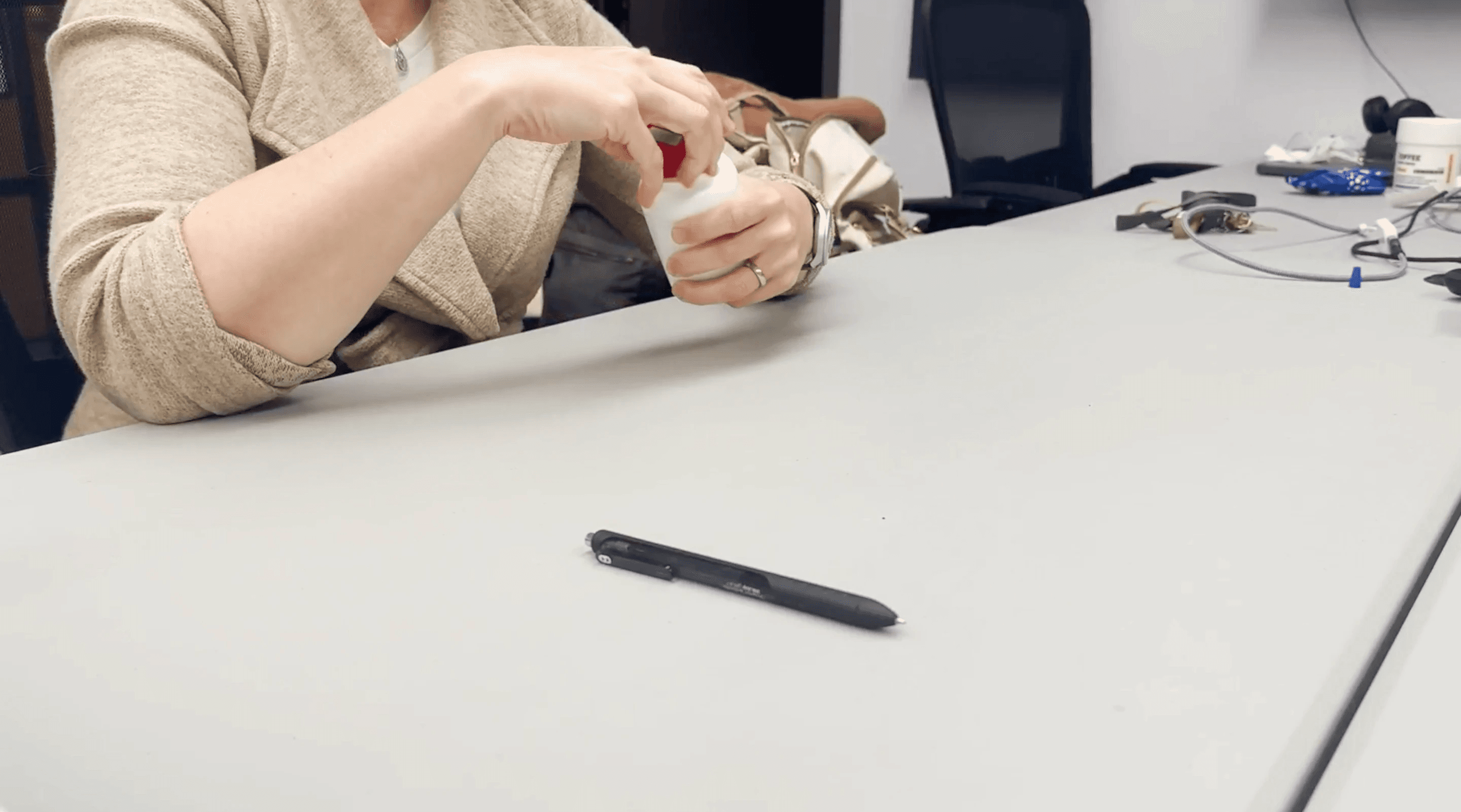
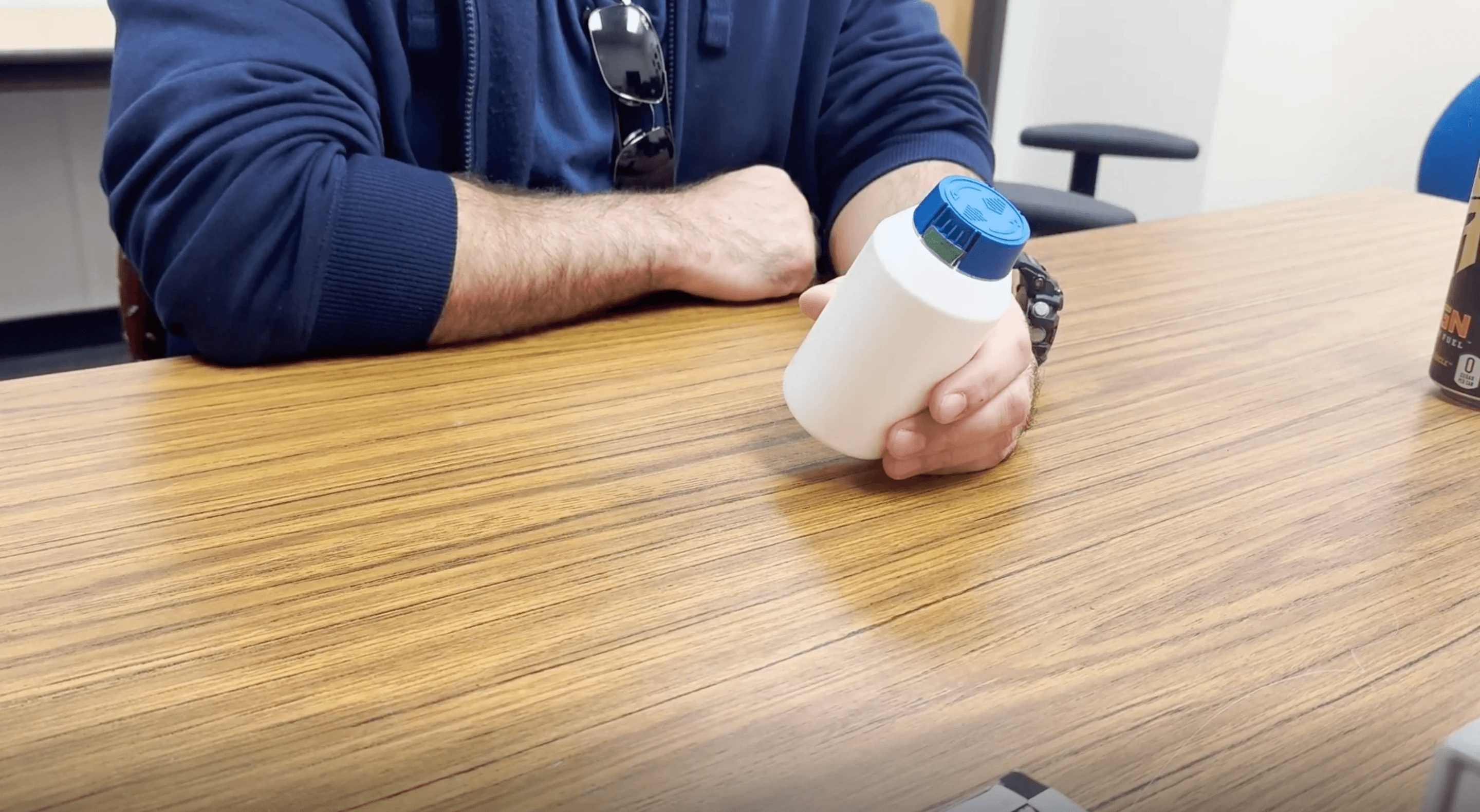

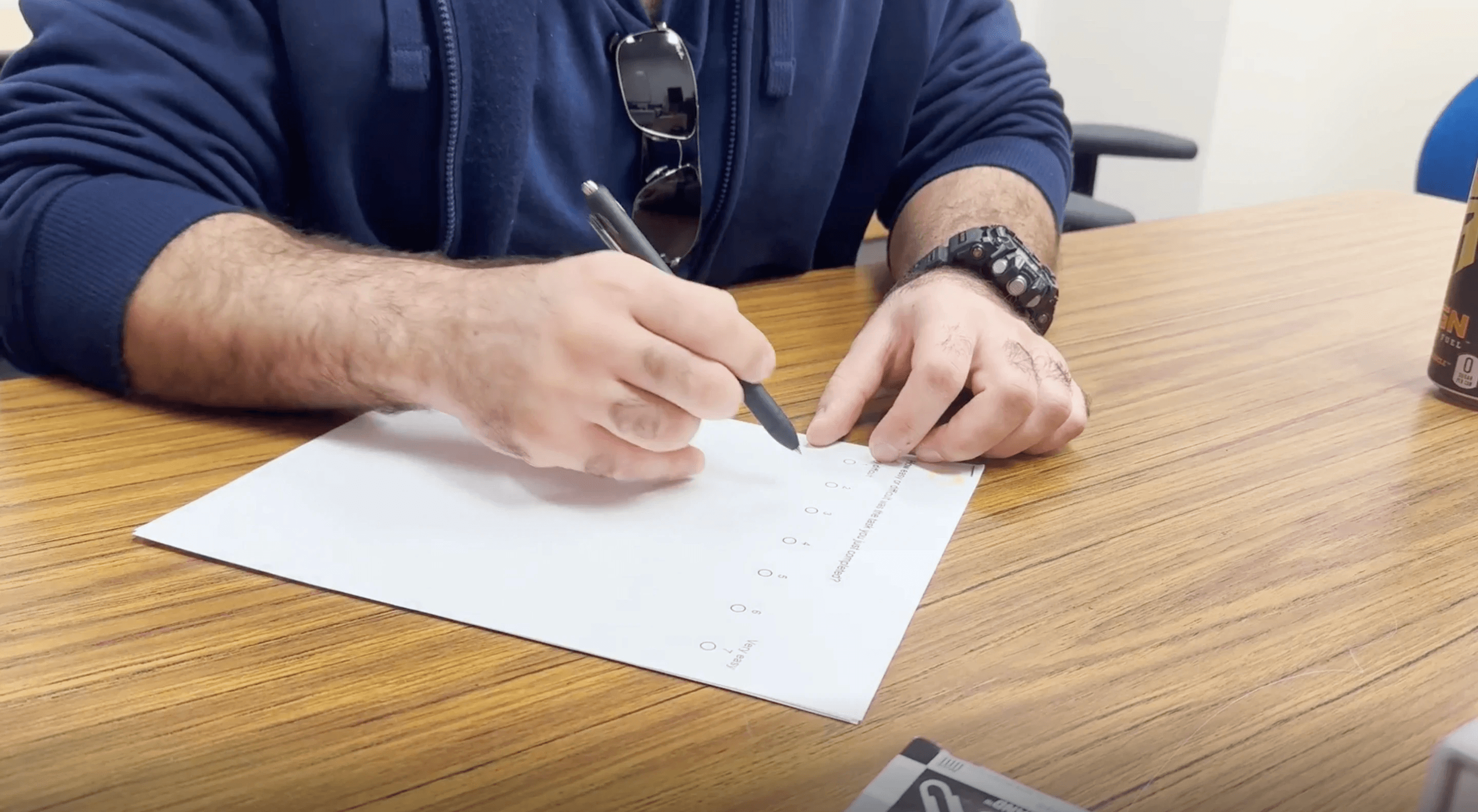
KEY RESULTS
Key consolidated results are described below. For details on each testing metric, see the report linked at the top of this page.
Our expert-based methods yielded similar qualitative results we observed in our user testing sessions. Common feedback from participants using both caps was that the clicking noise from the cap was a key indicator that it was fully secured on the bottle. After watching video footage from user testing, we noticed common behaviors, such as participants typically opening the push bottle by putting their hands on the sides of the cap (rather than pushing from the top), participants failing to initially gauge how much pressure they should apply when trying to bypass the locking mechanism, and participants using multiple different physical methods/double checking that the cap was closed after completing the task.
For the push cap, participants were objectively faster at opening it, rated it with higher overall usability (SUS), rated it easier to use (SEQ), rated it as requiring less workload (NASA-TLX), and rated it as requiring less physical exertion (BORG CR-10 and NASA-TLX subscale). For the squeeze cap, participants were faster at closing it and able to more quickly confirm it was closed.
Given the combination of our qualitative and quantitative results across expert evaluations and user testing, we deemed the push-and-turn cap to overall be the better cap for adult usage. While our users were not specifically those with dexterity issues, these results do signal that the push caps would be more usable for these populations (however further testing would need to be done to confirm this).
Our results also gave us some directions for further prototyping by revealing two common issues when using these caps: not always instinctively knowing how much pressure to apply on the cap to open the bottle, and some level of uncertainty existing as to whether the cap was fully closed and secured on the bottle.
Our results validated the good usability of these child-resistant caps, but also identified areas for improvement that we could address to make them better.
PROTOTYPING
Using the push-and-turn model (as our evaluation deemed it the most usable), we iterated multiple prototypes of improvement features for these caps, addressing the two problems we identified from our results. These features are low-fidelity, and further testing would need to be done on both adult and child users to evaluate their usability and safety before implementation.
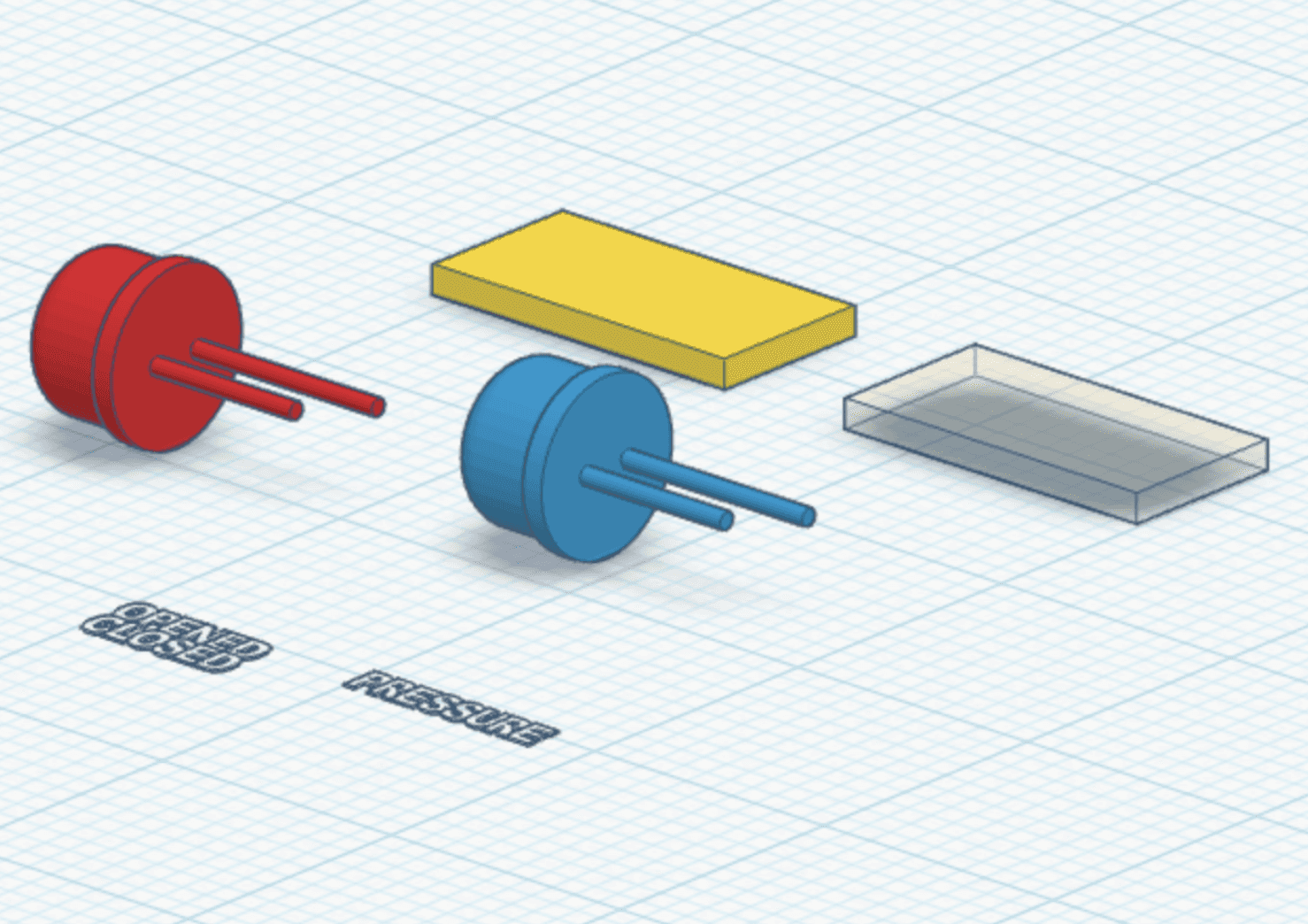
Below are images of our design process, with the proposed features: a pressure indicator, and an opened/closed indicator.
The top pictures show 3D models of these indicator concepts; the red and blue models represent the open/closed indicator, in which the model remains red when closed, and turns to blue when the bottle is fully opened. The yellow and transparent rectangle models represent the pressure indicator, in which the model gradually loses its color as more pressure is applied to the cap, becoming fully transparent when enough pressure is applied to bypass the child lock. These low fidelity models were designed by me and 3D printed by our team for our first prototype.
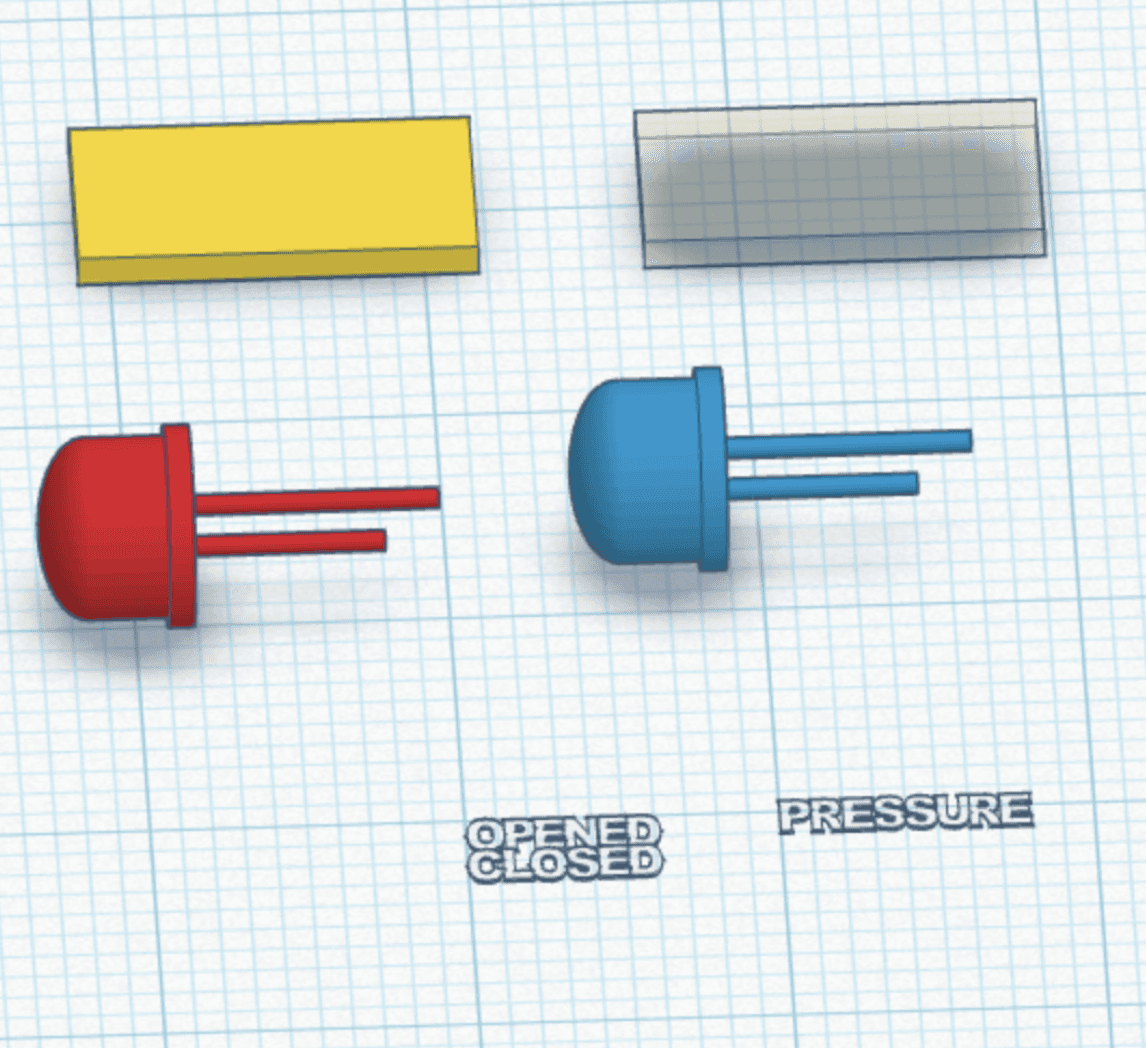
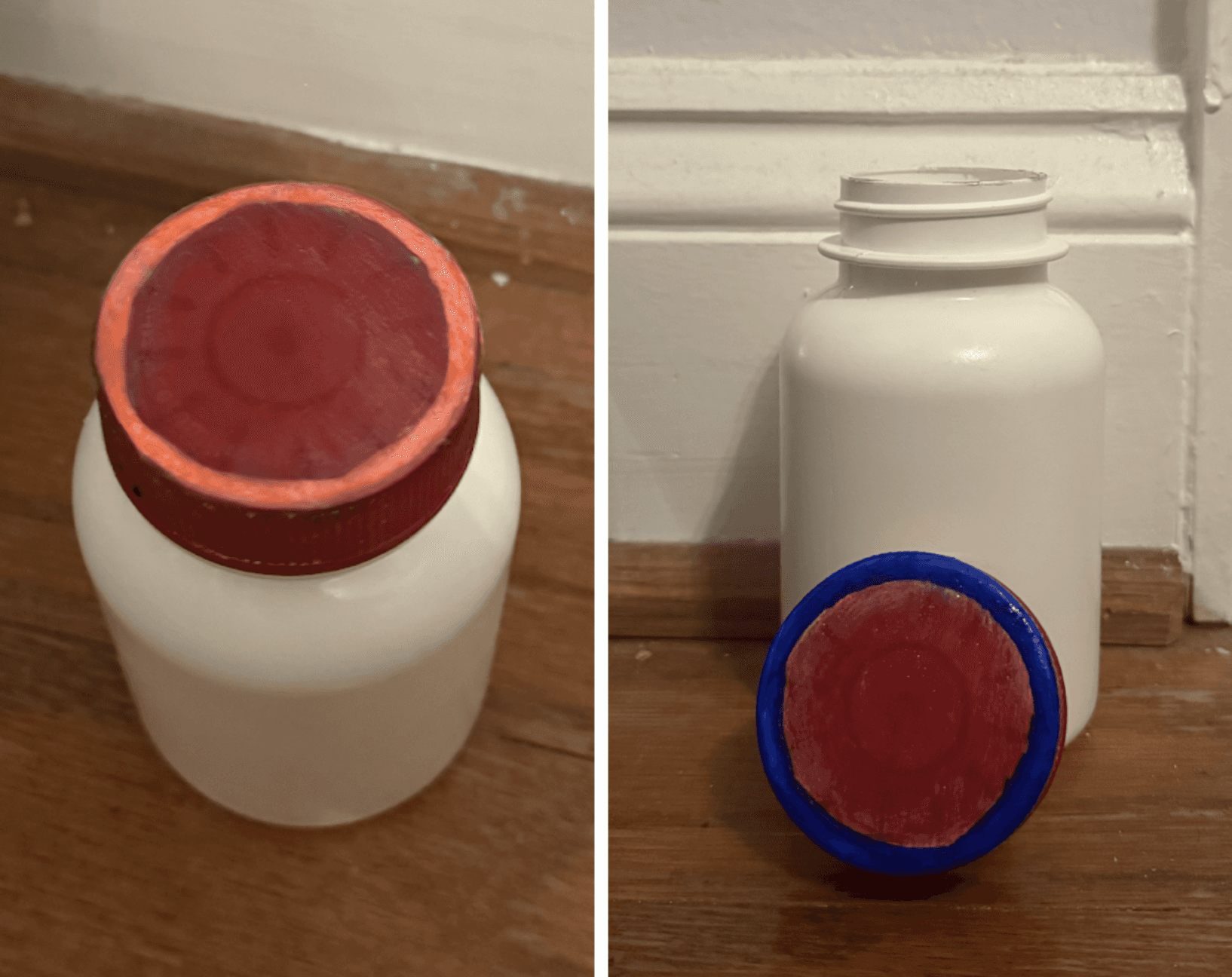
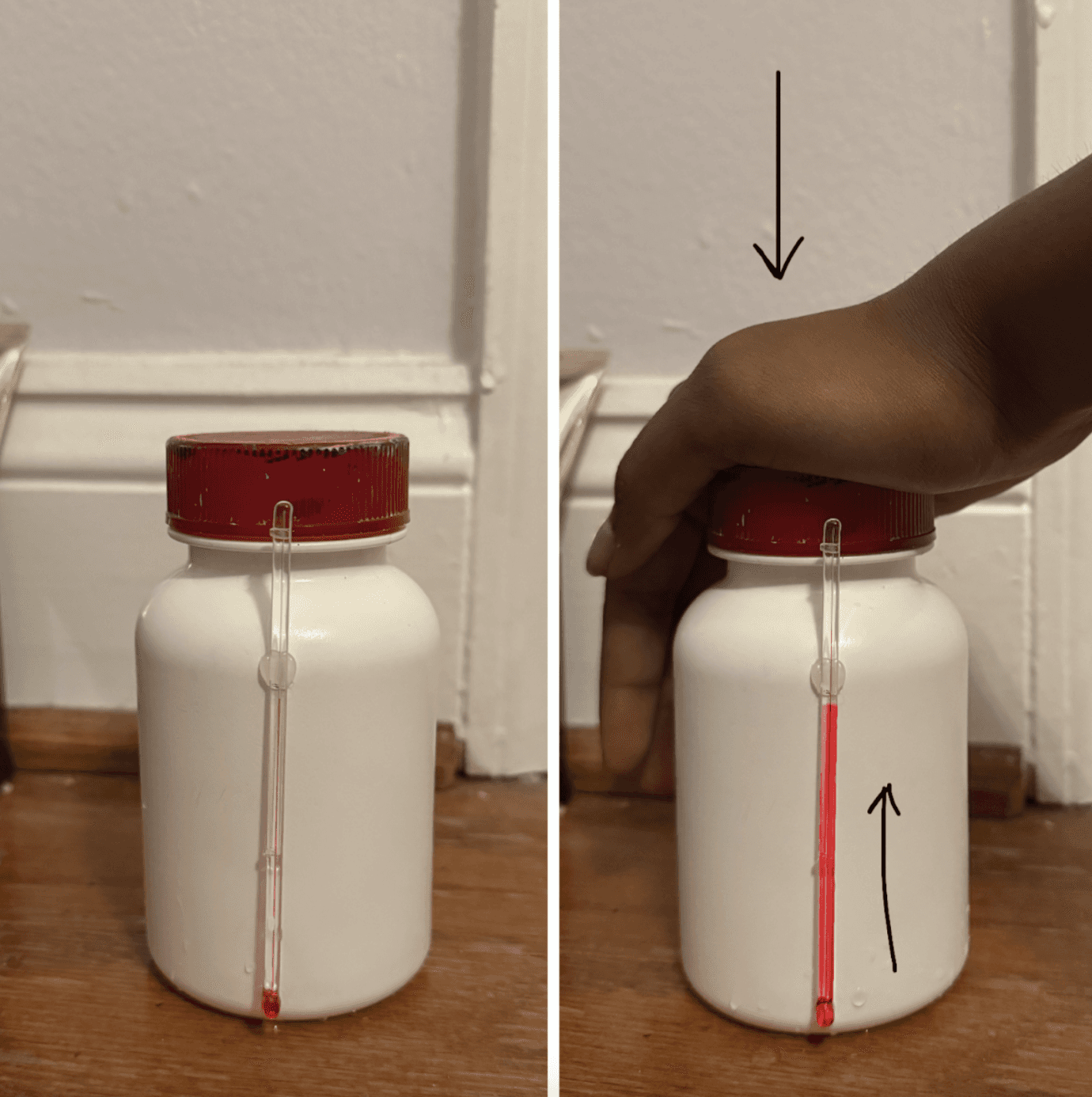
After our first prototype, we designed a second prototype based on initial feedback. The below photos show images of our second prototype, with indicator concepts that are designed to be more embedded within the cap/bottle itself rather than add-on pieces that could easily interfere with the cap's ease of use and present safety hazards for small children. The photos on the left show the open/close indicator, this time represented by a red or blue ring light around the cap. The photos on the right show the pressure indicator, inspired by similar mechanisms that have been used to indicate pressure levels: a thermometer.
Framer 2023
Amsterdam